Margaret Ellis used to walk everywhere.
For forty years, she and her husband George walked the loop around Sloan's Lake most mornings, rain or shine. After he passed, she kept walking alone for a while. Then her knee started acting up. Then it was easier to just stay in. Then one day her daughter Karen realized she couldn't remember the last time her mother had left the house for anything other than a doctor's appointment.
This isn't a story about a crisis. Nobody fell. Nobody got hurt. Margaret's world just got smaller, one skipped walk at a time, until a woman who used to know every dog owner on her block by name was spending most days in a recliner with the television on for company.
It's a common story. It's also, as Karen found out, a fixable one.
The Slow Shrink
Karen lives in Golden, about twenty-five minutes from her mother's house near Sloan's Lake in Denver. She called her every few days. The calls were fine. Margaret said she was fine. It took an actual visit, in February, for Karen to notice what the phone calls had been hiding.
The refrigerator had takeout containers going back further than she wanted to count. The mail was a small mountain on the kitchen table. Margaret's binoculars, the ones she'd used for birdwatching at the lake for as long as Karen could remember, sat on the windowsill with a fine layer of dust.
'How long since you've been down to the lake, Mom?' she asked.
Margaret shrugged. 'Knee's been bothering me.'
'How long since you've seen anybody? Talked to anybody besides me?'
She didn't really answer that one.
What Karen Was Actually Worried About
Karen wasn't worried about her mother falling, or forgetting her medications, or any of the things that usually come up first in these conversations. Margaret was managing fine on her own, physically. What worried her was harder to name.
She'd stopped being Margaret. The version of her mother who could tell you the name of every heron that nested at the lake, who used to strike up conversations with strangers at the farmers market about tomato varieties, who dragged George to every traveling exhibit that came through the Denver Art Museum, that version of her was still in there. She just wasn't going anywhere for it to show up.
'I didn't need someone to give my mom a bath,' Karen said later. 'I needed someone to get her out of that chair.'
Meeting Denise
Karen found Atlee Home Care through a friend at church whose mother had been matched with a caregiver a year earlier. What she noticed first was the word registry. Unlike an agency that assigns whoever's available for a given shift, a registry model meant Margaret would be matched with one specific person, someone Atlee felt actually fit her, not just whoever had an opening.
That person turned out to be Denise, a caregiver with two decades of experience and, as it happened, a standing membership at the Denver Botanic Gardens.
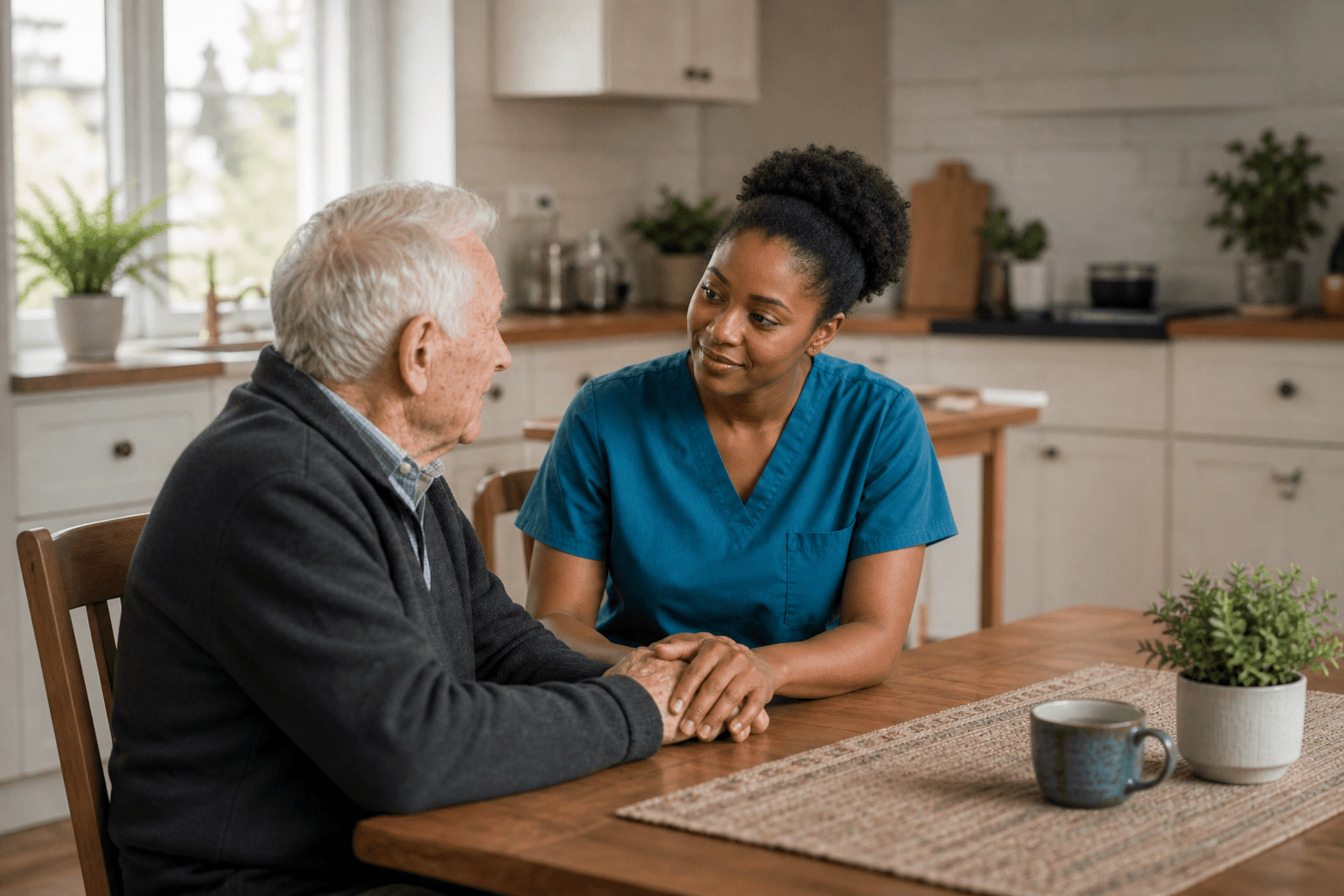
The first visit was awkward, the way first visits usually are. Margaret was polite but guarded. She'd agreed to this mostly to get Karen to stop worrying out loud. Denise didn't push. She made tea, asked about the binoculars on the windowsill, and let Margaret tell her about the herons.
By the second visit, Margaret was showing her photos on her phone, pictures from a decade of morning walks at Sloan's Lake that she hadn't looked at in months.
The Walks Come Back First
Denise's first real move wasn't a task off a checklist. It was a question. 'Would you show me the lake sometime? I'd like to see what you used to see.'
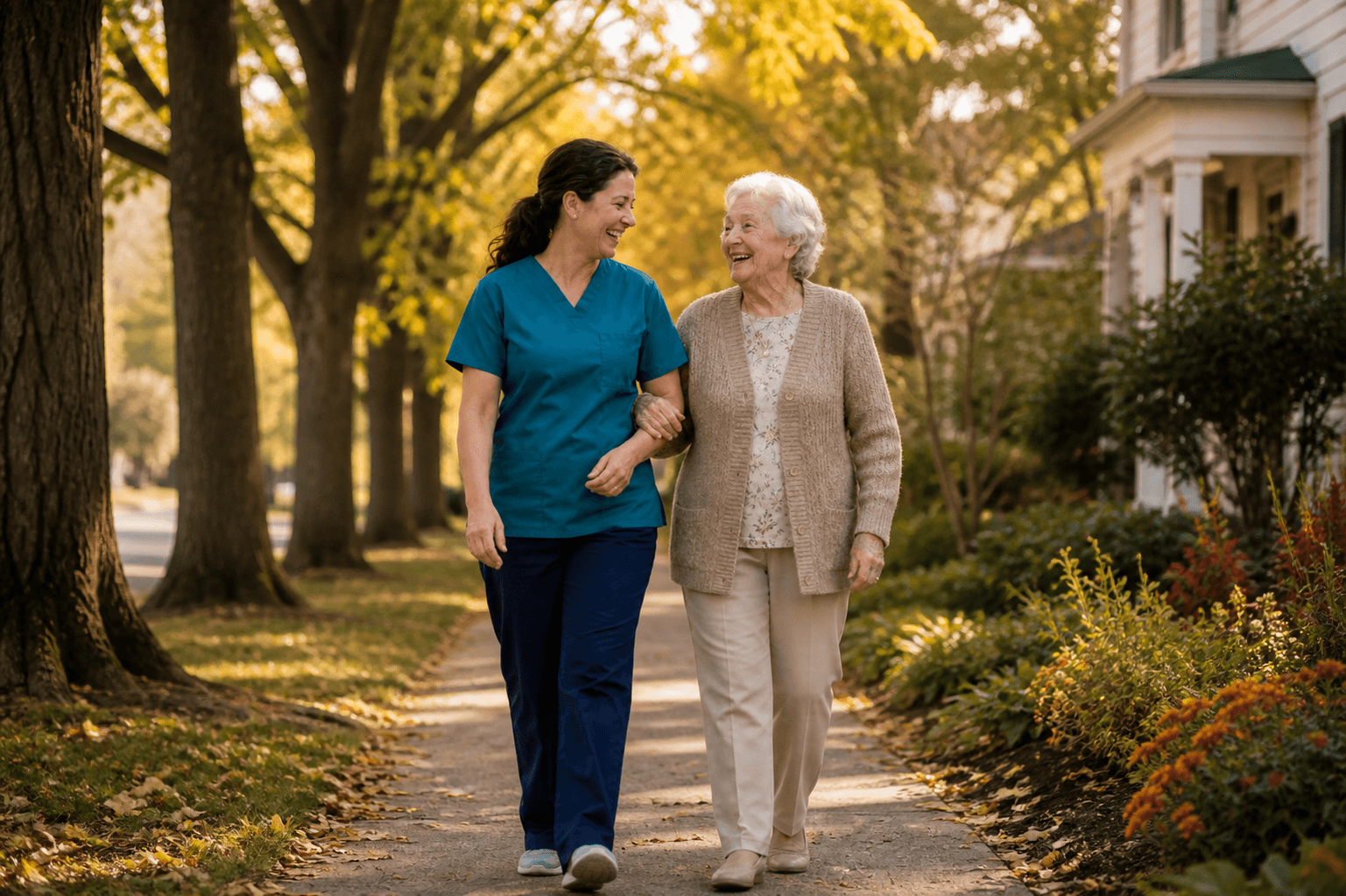
They went the following Wednesday. Margaret wore her old field jacket. It took them nearly forty minutes to cover a loop that used to take her fifteen, her knee slowing her down, but she pointed out a great blue heron working the shallows near the north shore and talked the whole way about the pair of ducks that used to nest there every spring.
They kept going every Wednesday after that. Some weeks it was a short walk to the end of the block and back, when her knee was bad. Some weeks it was most of the loop. The distance mattered less than the fact that she was out the door, in the world, narrating it to someone who wanted to listen.
Karen started calling them the Wednesday walks. She still does.
Then the Rest Came Back Too
Once the walks became routine, other things followed. Denise mentioned she needed to pick up a few things at the King Soopers on Sheridan, and asked if Margaret wanted to come along and show her which brand of coffee she liked. She did. That became a Tuesday thing.
In April, Denise saw a flyer for a traveling photography exhibit at the Denver Art Museum and asked Margaret if she'd ever been. She had, dozens of times, with George. She hadn't been back since. They went on a Thursday afternoon. Karen says her mother talked about the trip for a week.
By early summer, Margaret was eating lunch twice a month with a small group at the community dining room near her house, something Denise had encouraged after hearing her mention she missed 'eating with people instead of a TV.' She grumbled about going the first time. She hasn't missed one since.
None of this was in a care plan Karen had drawn up in advance. It emerged, one small outing at a time, because Denise treated getting to know Margaret as the actual job, not a task to check off before the real work started.
What This Actually Is
It's tempting to file this under 'nice to have.' It isn't. Isolation is one of the more dangerous conditions an aging adult can quietly develop, tied to real declines in physical health, cognitive function, and simple will to keep going. Someone who stops walking to the lake is at greater risk than someone who keeps walking to the lake, in ways that show up on paper eventually if nothing changes first.
Companionship care, at its core, is the work of keeping someone's actual life running, not just their body. Meals, medication reminders, help getting dressed, those things matter and Atlee caregivers handle them too. But the outdoor walks, the trip to the grocery store, the afternoon at the museum, the lunch with other people, those are not extras layered on top of care. For a lot of families, they're the whole point.
'Atlee's caregivers have been like family,' one Atlee family wrote in a recent review, 'wonderful companions, advocates, and helped our dad still enjoy outdoor walks, trips to the store, cultural opportunities or meals in the dining room.' Karen read that review before she'd ever heard of Atlee. It's part of why she called.
Margaret Now
It's been eight months since that first awkward visit. Margaret's knee still bothers her. She still misses George, especially on their old walking route. Some Wednesdays are shorter than others.
But the binoculars aren't gathering dust anymore. She's back to knowing which herons are nesting where. She has opinions about the tomatoes at the farmers market again, strong ones, which she shares with anyone who'll listen, including Denise, at length, every single week.
Karen still calls every few days. The calls sound different now. 'She actually has things to tell me,' Karen said. 'Not just that she's fine. Actual stories. I forgot how much I missed that.'
If someone you love has quietly stopped doing the things that used to make up their week, that's worth a conversation, not just a checklist. Call Atlee Home Care at (720) 378-8708 or email contact@atleecare.com. Sometimes the most important thing a caregiver does is simply ask, 'Would you show me?'