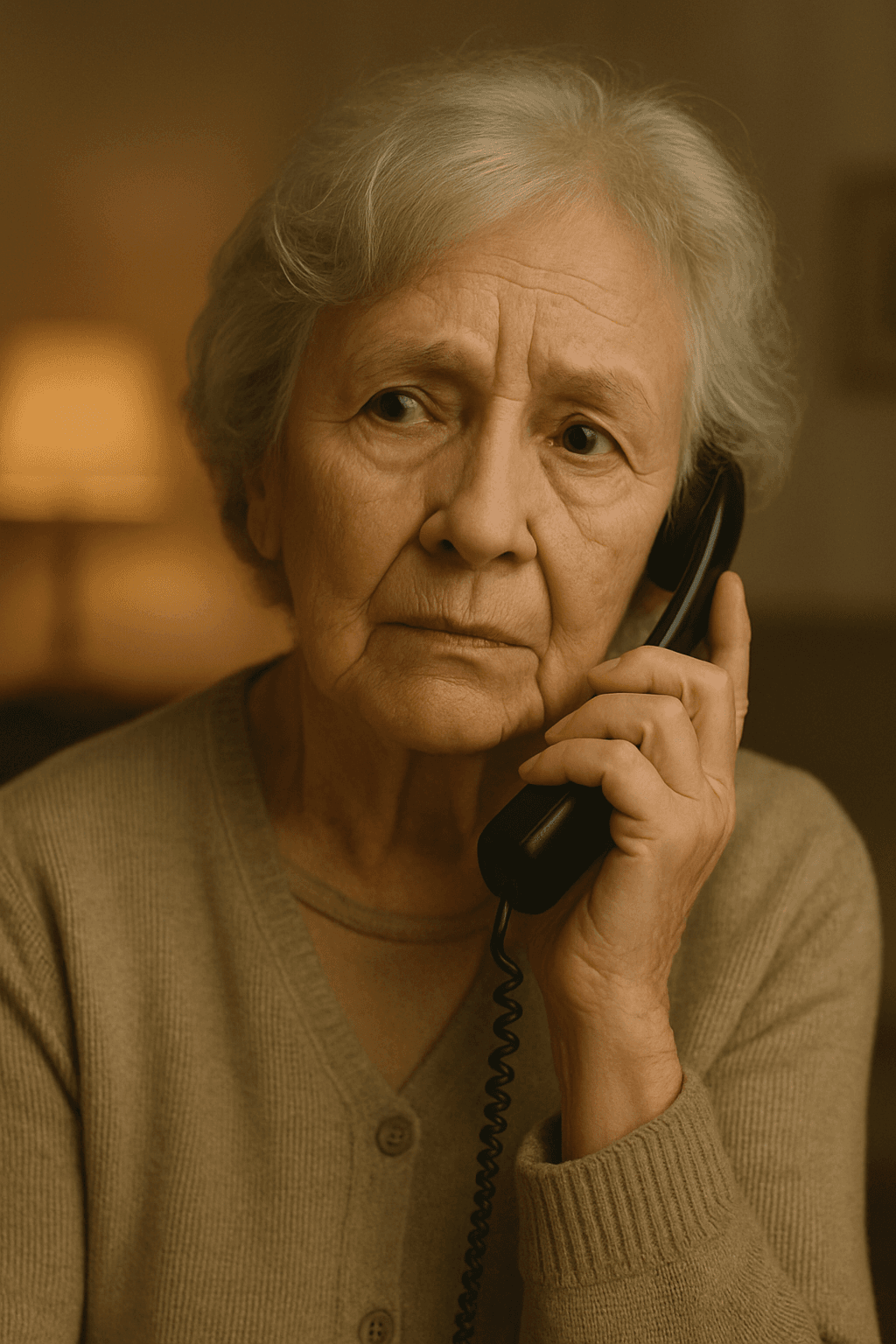

Dorothy Ambrose has lived at an independent living community in southeast Denver for a little over two years. The community does a lot right. There's a dining room with three meals a day, a morning wellness check, an evening one too, and a staff that genuinely cares about the residents they see.
What the community can't do is know Dorothy the way someone who sees her three mornings a week, every week, for a year, comes to know her. That's not a criticism of the community. A wellness check covers dozens of residents in a couple of hours. It's built to catch emergencies, not patterns. It was never going to catch a nearly-empty bottle of hand lotion, or a throw rug that had started to curl at one corner, or the fact that Dorothy had quietly stopped going to Tuesday bingo.
Renee, Dorothy's caregiver through Atlee Home Care, caught all three.
Why Claire Brought in Extra Help
Dorothy's daughter Claire lives across town in Cherry Hills Village, close enough to visit on weekends but not close enough to catch the small, daily things. When Dorothy moved into the community, Claire assumed the facility's care would be enough. For a while, it was.
About a year in, Claire started noticing gaps on her weekend visits. Small ones. Her mother's favorite decaf, the brand from the specialty grocer across town, kept running out between Claire's trips. Dorothy's supply of the unscented lotion her dermatologist recommended for her thinning skin would be gone for a week or more before anyone noticed. None of it was urgent. All of it was the kind of thing that quietly erodes a person's comfort and dignity when nobody's specifically responsible for tracking it.
Claire called Atlee Home Care not because the community was failing her mother, but because a facility built to serve dozens of residents was never going to have the bandwidth to notice one resident's coffee running low. She wanted someone whose actual job included noticing.
The Things Nobody Was Tracking
Renee started visiting Monday, Wednesday, and Friday mornings. Within the first few weeks, restocking Dorothy's personal items, the decaf, the lotion, a specific brand of shortbread cookies Dorothy pretended not to care about but always finished, became a routine part of the visit. Renee kept a running list on her phone, updated it after each visit, and did a grocery run every Wednesday.
It sounds small. Claire says it wasn't. 'My mother stopped mentioning when things ran out,' she said. 'I think she didn't want to bother me, or she felt embarrassed asking for something as basic as hand lotion. Renee just noticed and handled it. Mom didn't have to ask.'
The Rug
In April, Renee noticed the corner of the entry rug in Dorothy's apartment had started to curl up where it met the hardwood. It wasn't dramatic. It was the kind of thing a busy staff member doing a fifteen-minute wellness check might walk past a dozen times without registering as a hazard, especially for a resident who wasn't currently flagged as a fall risk.
Renee mentioned it to Dorothy first. Dorothy shrugged it off, the way she shrugged off most things. Renee mentioned it to the community's care coordinator the same day, not as a complaint, just a heads-up: the rug in Dorothy's apartment has a curled corner, might be worth a look before someone catches a toe on it.
Facilities maintenance fixed it within the week, re-tacking the edge flat. It's a small fix. It's also exactly the kind of small fix that prevents the kind of fall that turns into a hospital stay. Nobody at the community was negligent. There simply wasn't a system built to catch a curling rug corner in one specific apartment out of dozens, on a normal week, before it became a problem.
Tuesday Bingo
The third thing took longer to notice, because it was quieter than a rug or an empty lotion bottle. Dorothy had gone to Tuesday bingo in the community room every week for a year and a half. Sometime in the spring, she stopped.
Renee doesn't work Tuesdays, so she didn't see the absence directly. She noticed it in conversation, Dorothy mentioning offhand that she'd 'skipped bingo again,' twice in the same month, in a tone that didn't sound like someone taking a break by choice.
Renee asked a few gentle questions. It turned out Dorothy had stopped enjoying the game after a newer resident at her regular table had started making comments about Dorothy's hearing, comments that weren't cruel exactly, but wore on her enough that she'd rather skip it than sit through them. Dorothy hadn't mentioned this to Claire or to facility staff. She'd just quietly stopped going.
Renee brought it to the activities coordinator, who moved Dorothy to a different table the following week. Dorothy went back to bingo. She won forty dollars in nickels the second week back and would like everyone to know about it.
Why This Kind of Advocacy Matters
None of these three things, a coffee brand, a rug corner, a seating chart at bingo, would show up on an incident report. None of them were medical. All of them were real, and all of them affected whether Dorothy's daily life felt comfortable, safe, and hers.
Facility staff at a good community genuinely want to catch these things. But a wellness check is built for scale, dozens of residents, limited time, a focus on the things that can't wait. The small, cumulative, quality-of-life details, the kind that make a place feel like home instead of just a place someone lives, need someone paying attention specifically to one person, consistently, over time.
'Atlee's caregivers have been like family,' one recent Atlee review said, 'wonderful companions, advocates, and helped our dad still enjoy' the parts of his life that mattered to him. Claire read a version of that sentiment before she ever called Atlee. She says now it undersold it. 'I thought I was hiring someone to keep my mom company and pick up groceries. I didn't expect someone who'd actually go talk to facility staff on her behalf.'
What to Ask For, If Your Parent Lives in a Community
A good independent or assisted living facility handles meals, medical coordination, and safety at the scale it's built for. It usually isn't built to track one resident's personal preferences, catch a small hazard in a single apartment before it becomes a bigger one, or notice a quiet change in someone's routine that doesn't show up on any chart.
- Someone who visits consistently enough to notice patterns, not just isolated incidents.
- A caregiver willing to speak directly with facility staff, maintenance, and activities coordinators when something needs attention.
- Regular restocking of the personal items a facility's dining and housekeeping services don't cover.
- Someone your parent will actually tell the small things to, the ones they'd never think to flag to facility staff themselves.
That's not a replacement for a good facility. It's a second layer of attention on top of one, focused entirely on one person. If you want to talk about what that could look like for your family, call Atlee Home Care at (720) 378-8708 or email contact@atleecare.com.