
Emily Parker landed at DIA on Wednesday afternoon, excited for Thanksgiving in Highlands Ranch. She hadn't been home since Easter. The flight from Seattle was smooth, her rental car was ready, and she was looking forward to four days with her mother Margaret, her brother David, and the grandkids.
She talked to Mom every Sunday without fail. Margaret always sounded sharp, always had news about the neighbors, always asked about Emily's job at the architecture firm. If anything, the calls had gotten shorter lately, but Emily chalked that up to Mom being busy.
David had been hinting at something for months. Little comments dropped into conversations like stones into still water. "Mom seems a little off." "Have you noticed anything when you call?" "Maybe you should come visit soon." Emily heard the words but didn't hear what he was really saying. From 1,300 miles away, it's easy to believe what you want to believe.
This Thanksgiving would change everything.
The Flight from Seattle
The three-hour flight gave Emily time to think. She'd been making this trip twice a year for the past decade, ever since Dad passed. Mom had always been the rock of the family, the one who held everything together with equal parts determination and pot roast.
Margaret Parker was 74, a retired elementary school teacher who'd spent 35 years shaping young minds. She'd lived in the same Highlands Ranch home for 28 years. She knew every neighbor, attended every community event, and had organized the block's annual Fourth of July barbecue since 1998.
On the phone, Mom sounded like Mom. She asked about Emily's projects at work. She mentioned her book club selection. She talked about the weather. Everything seemed normal.
But David's hints had planted a seed of worry that Emily couldn't quite ignore. She told herself she'd pay extra attention this visit. She told herself it was probably nothing.
Thursday Morning: The Moment Everything Changed
Emily arrived at her mother's house at 8:30 Thanksgiving morning, arms full of flowers and the sweet potato casserole she always brought. The front door was unlocked, which was unusual. Margaret was meticulous about locking up.
She found her mother standing in the kitchen, still in her bathrobe, staring at the turkey. The bird was sitting on the counter, still in its plastic wrapper. The oven was cold. No prep work had been started. No onions chopped, no celery diced, no bread laid out for stuffing.
Margaret had cooked Thanksgiving dinner for 45 years. She could prepare a full holiday meal for twelve people from memory, timing every dish to land on the table within a five-minute window. It was her masterpiece, performed annually with the precision of a symphony conductor.
But this morning, she was standing in front of a wrapped turkey with a look Emily had never seen on her mother's face before. Not confusion exactly. Something worse. Fear.
"Mom? Are you okay?"
Margaret turned, and for just a moment, Emily saw something flicker across her mother's face. Then Margaret smiled, and it was gone.
"Oh, honey, I was just getting started. I got a late start this morning, that's all."
Emily put down the flowers and stepped in. Together, they got the turkey prepped and in the oven. Emily did most of the work while Margaret directed. It felt almost normal. Almost.
The Thanksgiving Table: Four Hours of Truth
Dinner started at 1:00 PM. David was there with his wife Karen and their two kids, Tyler and Madison. Emily's flight schedule meant she'd come alone this year. Twelve people gathered around Margaret's dining room table, the same oak table where the family had celebrated every major holiday for nearly three decades.
Emily decided to really watch this time. Not as a daughter enjoying the holiday. As someone paying attention.
What she saw over the next four hours broke her heart.
**1:15 PM** -Margaret told a story about her friend Betty's new dog. It was a good story, detailed and funny. The whole table laughed. Eleven minutes later, Margaret told the same story again, almost word for word. Same details, same punchline. David caught Emily's eye across the table. Karen suddenly became very interested in her green beans. At 1:34 PM, Margaret started the story a third time. Tyler, who was sixteen, gently said, "That's a great story, Grandma. You told us about Biscuit already." Margaret looked confused for a moment, then laughed it off. "Well, it's worth telling twice," she said.
**2:30 PM** -Margaret turned to Tyler and asked what grade he was in. Tyler is a junior in high school. Margaret had attended his football games this fall. She'd been to at least three of them, sitting in the stands with a blanket and a thermos of coffee. "I'm a junior, Grandma," Tyler said carefully. "Same as last time you asked." It was the "last time you asked" that hit Emily hardest. This wasn't the first time.
**3:45 PM** -Margaret went to the kitchen for Tupperware to pack up leftovers. She'd organized that kitchen herself 30 years ago. Every drawer, every cabinet, every shelf. She opened four different cabinets before finding the containers. She stood in front of the open cabinet for a long moment, as if she'd forgotten what she was looking for.
**4:00 PM** -The moment Emily will never forget. Margaret was sitting at the table, the remains of dinner spread around her, grandchildren playing in the living room. Her eyes filled with tears. Without prompting, without anyone asking, she said quietly: "I'm so tired of forgetting things."
The table went silent. Madison, who was twelve, reached over and held her grandmother's hand. David looked at Emily. Karen looked at her plate. For a long moment, nobody spoke.
"It's okay, Mom," Emily said, reaching for her hand. "We all forget things."
But they both knew this was different.
The Kitchen Conversation
After dessert, after the kids had retreated to the basement with their phones, after Karen had started the dishes, Emily and David stood in the kitchen. The conversation they'd been avoiding for months finally happened.
"How long?" Emily asked.
David leaned against the counter. "I started noticing maybe six months ago. Little things at first. She called me Michael twice." Michael was their father's name. "She forgot about a dentist appointment. Then she forgot she'd already paid a bill and paid it again."
"Why didn't you tell me?"
"I tried, Em. I've been trying. You kept saying she sounded fine on the phone."
He was right. Emily had heard what she wanted to hear. From 1,300 miles away, it was easy to focus on the familiar sound of Mom's voice and miss the gaps in between.
David had been carrying this alone for months. Stopping by after work to check on things. Quietly making sure bills were paid. Restocking the refrigerator when he noticed it getting bare. Doing all of this while working full-time and raising two kids.
"She needs help, Em," David said. "More than I can give her."
Emily nodded. For the first time all day, she let herself feel the full weight of what was happening. Her mother, the woman who had held everything together for their entire lives, was struggling. And she needed them to be strong enough to help.
Signs Your Aging Parent Needs Help: What the Thanksgiving Table Reveals
Emily's experience is far more common than most families realize. Holiday visits are often the moment when adult children, especially those who live far away, first recognize that a parent is declining. There's a reason for this: holidays provide something that phone calls and FaceTime sessions can't. Extended, unstructured time together.
During a phone call, a parent can prepare. They can gather their thoughts, stick to comfortable topics, and keep the conversation short. A thirty-minute call can be managed even when memory and cognition are starting to slip.
But Thanksgiving dinner lasts four hours. It requires sustained attention, multiple conversations, real-time recall. It's the cognitive equivalent of a stress test, and it reveals what shorter interactions hide.
Warning signs that commonly emerge during holiday visits include:
- Repeating stories or questions within a short time period
- Difficulty remembering recent events that should be familiar (grandchildren's grades, recent visits, family news)
- Trouble navigating familiar spaces, like a kitchen they've organized themselves
- Struggling with tasks they've performed for decades, like cooking a holiday meal
- Emotional moments of self-awareness: "I'm so tired of forgetting things"
- Personality changes like withdrawal from conversation or unusual anxiety
- Physical signs like weight loss, poor hygiene, or unkempt appearance
- A home that's less clean or organized than it used to be
Any one of these might mean nothing on its own. Together, they tell a story. And for adult children who haven't seen a parent in months, the contrast between the person they remember and the person sitting at the table can be jarring.
The Conversation That Changed Everything
Friday morning, Emily sat down with her mother at the kitchen table. No pretense, no agenda. Just coffee and honesty.
She'd spent most of the night preparing what to say. She'd rehearsed gentle openers and careful language. She'd braced herself for resistance, for anger, for denial.
She didn't need any of it.
"Mom, I want to talk about how things are going. Really going."
Margaret set down her coffee cup and looked at her daughter with clear eyes. "I was wondering when you'd bring it up," she said.
It turned out Margaret knew. She'd known for a while. She was relieved someone was finally acknowledging it.
She told Emily that she'd stopped driving at night three months ago because she didn't feel confident navigating intersections after dark. She'd been ordering delivery for most meals because the grocery store had become overwhelming. She'd missed book club twice because she forgot what day it was.
"I'm scared, Emily," she said. It was the most honest thing she'd ever heard her mother say.
"I know, Mom. But you don't have to be scared alone."
They talked for two hours that morning. About what was hard. About what she needed. About what she was afraid of losing. Margaret's biggest fear wasn't the forgetting itself. It was losing her independence. Being sent to a facility. Being treated like she was broken.
"I want to stay in my home," Margaret said. "I just need a little help."
Finding Denver Home Care Support After the Holidays
Emily spent the weekend researching options. She called three home care services in the Denver area. The first two interactions felt transactional. One asked for Margaret's diagnosis before asking her name. Another launched into pricing tiers and service packages within the first minute. Neither one asked about Margaret as a person.
Then Emily called Atlee Home Care at (720) 378-8708.
Lori answered. And the first thing Lori said, after Emily explained the situation, was: "Tell me about your mom."
Emily wasn't prepared for that question. She started talking about Margaret's career, her love of teaching, her garden, her friendship with Betty. She talked about the Thanksgiving dinner and the turkey and the forgotten Tupperware. She talked about her mother's fear and her own guilt about living so far away.
At some point, Emily realized she was crying. Lori let her. She didn't rush. She didn't redirect to a sales pitch. She listened.
"It sounds like your mom is an incredible woman," Lori said when Emily finished. "And it sounds like she needs someone who's going to respect who she is while helping with the things that have gotten harder. Let me think about who might be a good fit."
That phrase -"a good fit" -meant something. It wasn't about filling a shift or checking a box. It was about finding a person who would connect with Margaret as a human being.
How Denver Home Care Services Changed Everything
Lori connected Margaret with Susan, an independent caregiver with fifteen years of experience and a background in education. The match was intentional. Lori knew that Margaret, a retired teacher, would connect more easily with someone who understood the world of education, who valued structure and routine, who could engage in real conversation.
The first visit was tentative. Margaret was nervous. She'd never had anyone "help" her in her own home before. But Susan didn't come in like a caregiver. She came in like a guest. She asked about the photos on the mantel. She noticed the book on the coffee table and asked if Margaret was enjoying it. She admired the garden, even though it was November and everything was dormant.
"She treated me like a person, not a patient," Margaret told Emily on the phone that Sunday. For the first time in months, Margaret sounded like herself.
Susan started coming three times a week. She helped with meal preparation, light housekeeping, and medication reminders. But more importantly, she provided companionship. She and Margaret worked on jigsaw puzzles and talked about books. They took short walks when the weather allowed. Susan drove Margaret to her hair appointment and waited, never hovering, just present.
Within a month, David noticed the change. Margaret was more engaged, more confident, less anxious. The refrigerator was stocked. The bills were organized. And David could stop by to be her son again, not her caretaker.
Long-Distance Caregiving: What Adult Children Need to Know
Emily's situation is increasingly common. According to the National Alliance for Caregiving, approximately 11% of family caregivers live more than an hour away from the person they care for. From a distance, caregiving takes on a different shape. You can't check in by swinging by after work. You can't see the unopened mail piling up or notice that the milk in the fridge expired two weeks ago.
Long-distance caregiving requires a different approach:
- Establish regular check-in calls, but understand their limitations. A parent who sounds fine on a 20-minute call may be struggling in ways that conversation can't reveal.
- Listen to local family members. David had been trying to tell Emily for months. When the sibling who's there every day says something is wrong, believe them.
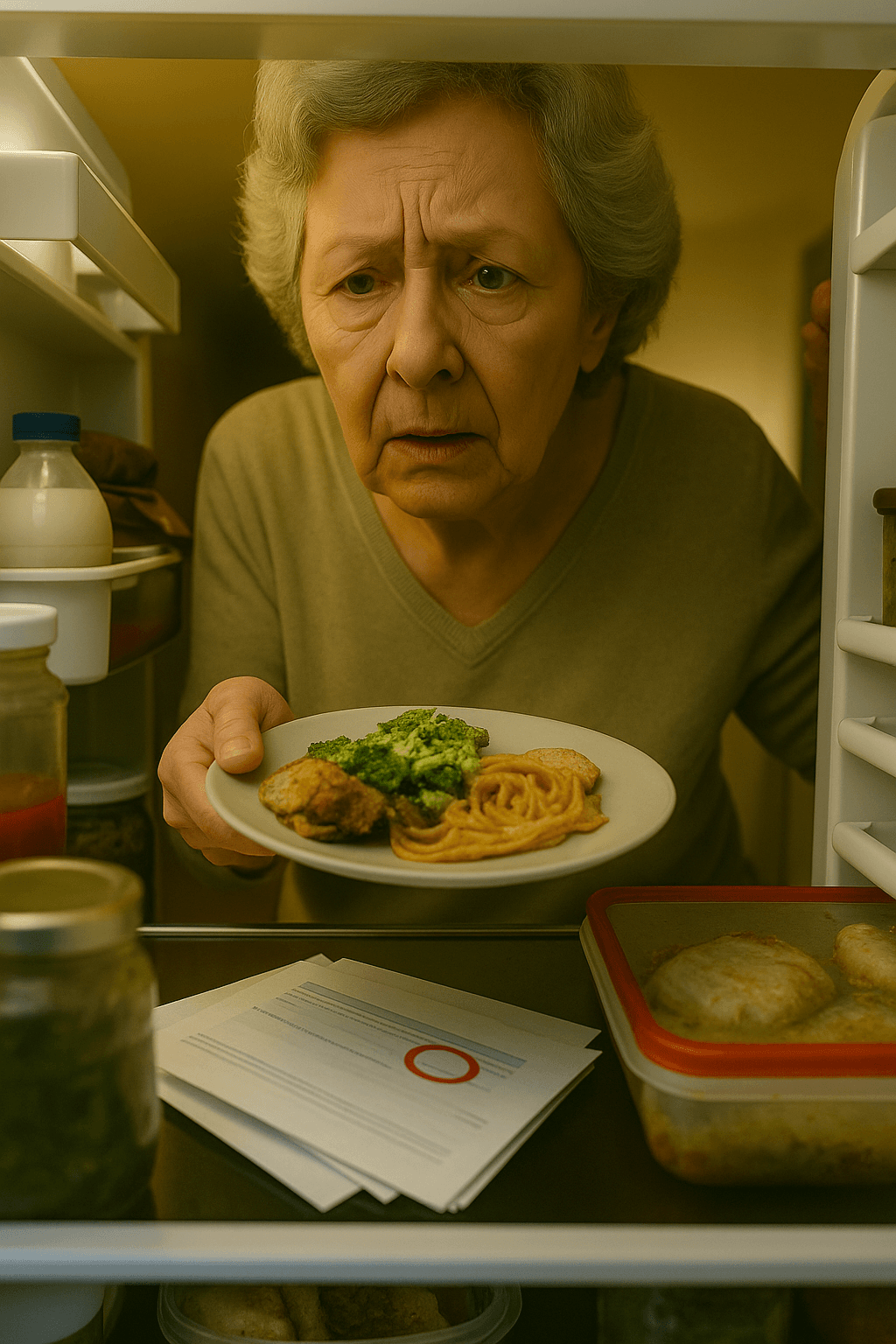
- Visit with intention. When you do visit, set aside time to really observe. Look at the mail. Check the fridge. Notice whether the house is as clean as it used to be.
- Have the conversation early. Don't wait for a crisis. Margaret was relieved when Emily finally brought it up.
- Find local support. You can't be there every day, but someone can be. The right caregiver becomes your eyes and ears, your partner in care from a distance.
Emily now gets weekly updates about how Margaret is doing. She knows what Margaret had for dinner, whether she made it to book club, how her garden is coming along in spring. It doesn't replace being there, but it gives Emily peace of mind that her mother isn't alone.
Warning Signs to Watch For During Holiday Visits
If you're visiting an aging parent this holiday season, here are specific things to watch for. Not to be alarmist. Not to jump to conclusions. But to see clearly, the way Emily wished she had seen sooner.
- Repetition: Does your parent repeat the same story or question within a short period? Once might be normal. Three times in twenty minutes is a signal.
- Disorientation in familiar spaces: Can your parent navigate their own home easily? Do they struggle to find things they've always known the location of?
- Difficulty with routine tasks: Can they still cook, do laundry, manage medications? Tasks they've done for decades should be automatic. When they're not, pay attention.
- Changes in appearance: Is your parent well-groomed? Are their clothes clean? Have they lost or gained weight?
- Home condition: Is the house as clean and organized as it used to be? Check the fridge, the bathroom, the laundry room.
- Emotional changes: Is your parent more anxious, more withdrawn, or more easily frustrated than usual? Mood changes can signal cognitive decline or depression.
- Social withdrawal: Have they stopped attending activities they used to enjoy? Cancelled appointments or stopped seeing friends?
- Mail and finances: Is mail piling up? Are bills unpaid or paid multiple times? Financial management is often one of the first complex tasks to become difficult.
These observations are not diagnoses. They're data points. And like any good data, they're most useful when you act on them.
When to Consider Professional Senior Care Support
Not every aging parent needs care immediately. Many seniors live independently well into their 80s and beyond. But when signs start to accumulate, the question isn't whether to get help. It's when.
The best time to explore care options is before there's a crisis. Before the fall. Before the hospitalization. Before the moment when everything changes overnight and decisions have to be made under pressure.
Margaret's situation was caught at a relatively early stage. She was still independent in many ways. She just needed support with the things that had become harder. That's the ideal scenario: intervening early enough that the transition is gentle rather than jarring.
If you're considering home care support in the Denver area, here are some things to look for:
- A service that asks about your parent as a person, not just their care needs
- Thoughtful matching between your parent and a caregiver, based on personality, interests, and communication style
- Flexibility to adjust the level of support as needs change
- Clear communication with family members, including those at a distance
- Respect for your parent's autonomy and desire to remain in their own home
At Atlee Home Care, the approach starts with a conversation. Not an intake form, not a sales pitch. A conversation. You can reach Lori and the team at (720) 378-8708 or at contact@atleecare.com. They'll ask about your parent. They'll listen. And they'll help you figure out what comes next.
The Gift of Early Intervention
It's been over a year since that Thanksgiving dinner. Margaret still lives in her Highlands Ranch home. She still hosts the family holidays. The difference is that now Susan helps with the prep, and Margaret directs everything from her spot at the kitchen counter.
Last Thanksgiving, the turkey was in the oven by 8:00 AM. Margaret supervised every step. She told Susan exactly how to season the stuffing, where to find the good serving platter, and how to arrange the table the way she'd always done it. She told the Betty's-dog story once, laughed about it, and moved on.
At 4:00 PM, when the table was cleared and the grandkids were in the basement, Margaret didn't cry. She smiled. She looked at Emily and David and said, "I'm glad you said something. I was so scared to ask for help."
Emily flew back to Seattle that Sunday. She called her mother from the airport, the way she always did. Margaret picked up on the second ring.
"I had a wonderful Thanksgiving, sweetheart," Margaret said. "Susan and I are already talking about Christmas."
Emily hung up and sat at her gate, watching the planes. For the first time in a long time, the distance between Seattle and Denver didn't feel quite so far.
If you're an adult child who noticed something during the holidays, trust what you saw. You don't have to have all the answers. You just have to start the conversation. Atlee Home Care can help with the rest. Call (720) 378-8708, or email contact@atleecare.com.