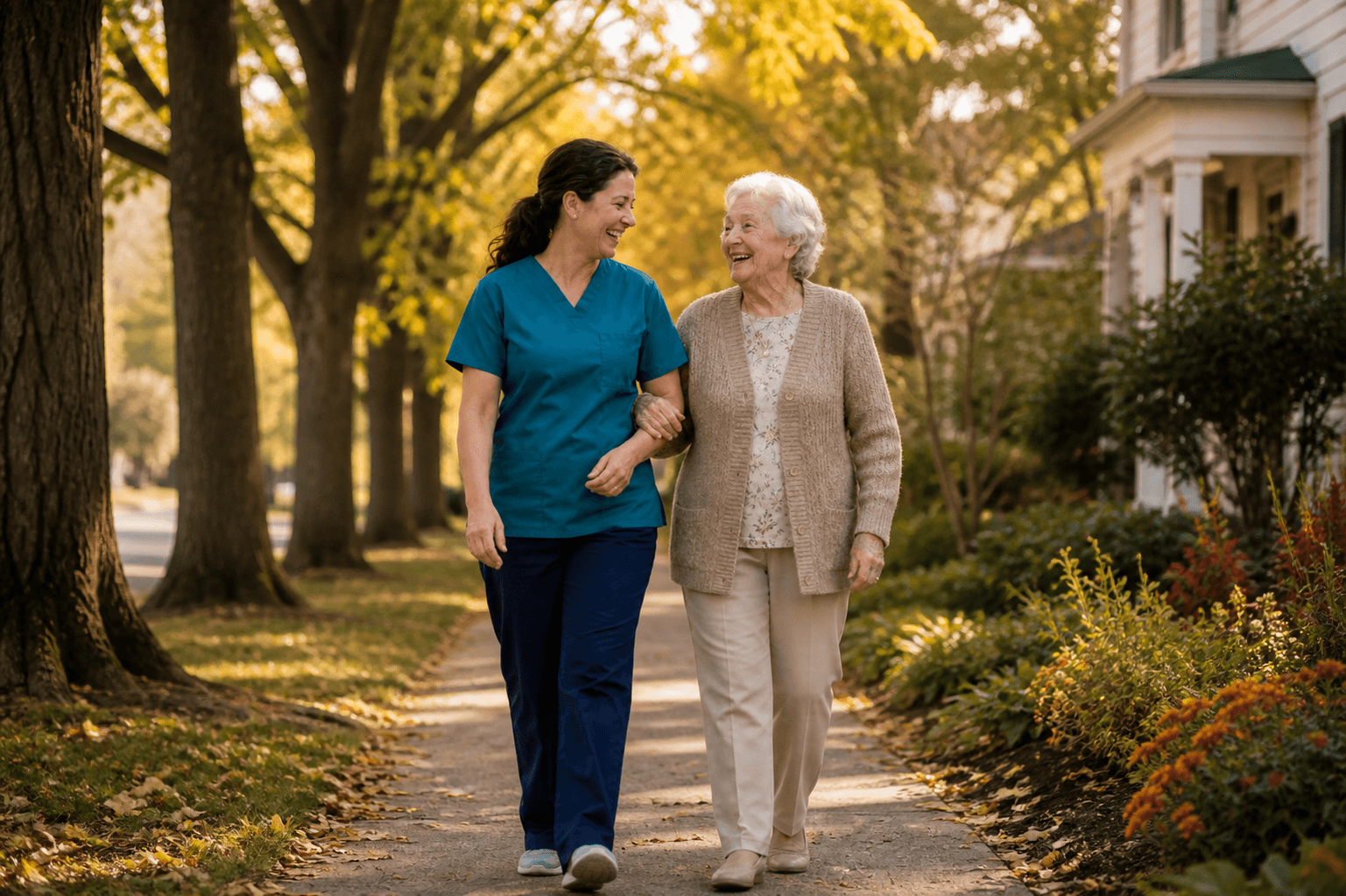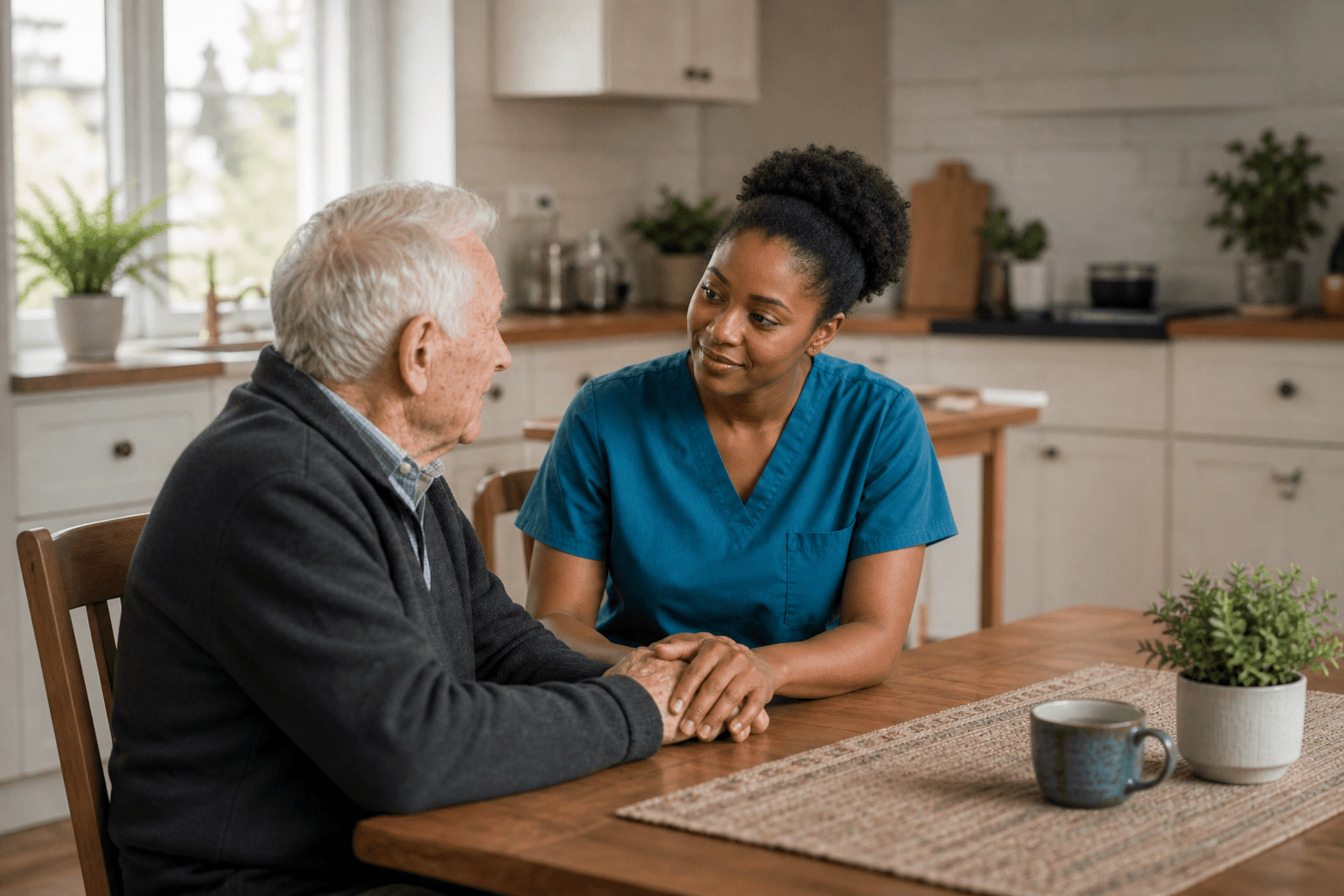
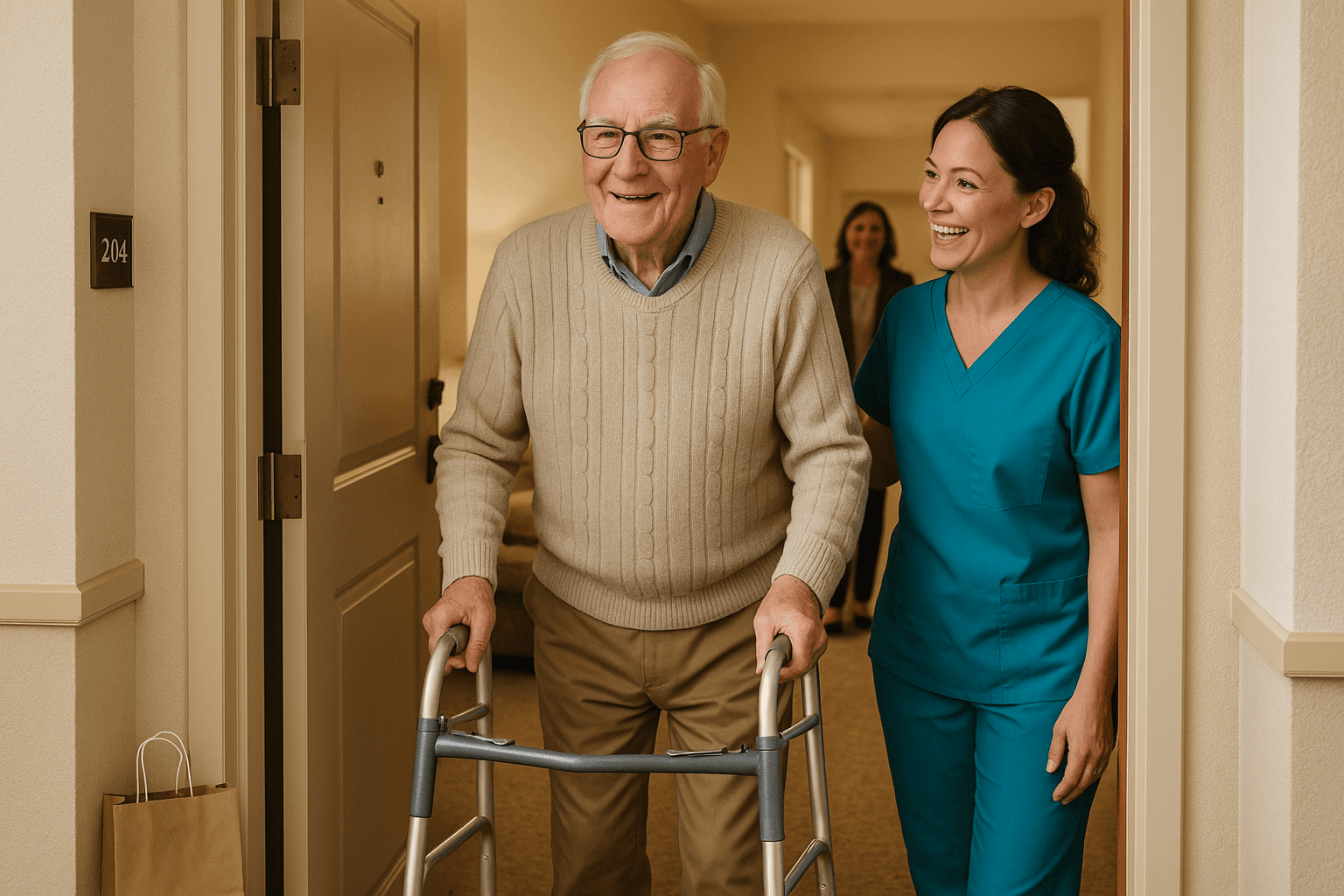
Mark Sullivan's phone rang at six-thirty on a Monday morning. He was in the middle of making coffee, half-listening to the news, running through his mental checklist for the day. The number on the screen was The Gables, the independent living community in Littleton where his father Frank had lived for the past four years.
Mark's stomach dropped before he answered. Calls from The Gables at six-thirty in the morning are never good news.
Frank Sullivan, eighty-three years old, had fallen in his apartment sometime during the night. He'd been getting up to use the bathroom, misjudged the distance to his walker, and gone down hard on the tile floor. A staff member found him during the morning wellness check, alert but in significant pain. The ambulance was already on its way.
By eight o'clock, Mark was at the hospital. By ten o'clock, the X-rays confirmed what the emergency room doctor suspected: a broken hip. Frank would need surgery - a partial hip replacement - followed by an extended recovery. The orthopedic surgeon was straightforward about the timeline. Two weeks in the hospital, minimum. Then three weeks in a skilled nursing rehabilitation facility for intensive physical therapy. And then, if everything went well, Frank could return to his apartment at The Gables.
"If everything goes well" is a phrase that carries a lot of weight when you're talking about an eighty-three-year-old man with a broken hip.
The Fall That Changes Everything
Hip fractures in older adults are not just broken bones. They're inflection points. They divide a life into before and after. Before the fall, Frank Sullivan was a vigorous, independent man who walked to the community dining room three times a day, attended lectures on history and current events, played bridge on Thursday afternoons, and drove himself to his barber every three weeks. After the fall, everything was uncertain.
The statistics are sobering. Roughly three hundred thousand Americans over sixty-five are hospitalized for hip fractures every year. Up to one in three adults over sixty-five who break a hip will not survive the following year. Those who do survive often face a permanent decline in mobility and independence. Many never return to their previous living situation. A hip fracture at The Gables could easily become a one-way ticket to assisted living or a nursing home.
Mark knew these numbers. He'd looked them up on his phone in the hospital waiting room while his father was in surgery, and he'd wished immediately that he hadn't. But he also knew his father. Frank Sullivan was stubborn in the best possible way. He'd survived a quadruple bypass at seventy-one and was walking the halls of the cardiac unit within forty-eight hours. He'd buried his wife of fifty-four years and, after a hard six months, had rebuilt a social life at The Gables that kept him engaged and active. He was not a man who gave up easily.
The question wasn't whether Frank wanted to go home. It was whether he could.
The Assessment That Determined Everything
Five weeks after the fall - two weeks in the hospital and three weeks at the skilled nursing facility - Frank was approaching discharge. His physical therapy team was encouraged. He was weight-bearing on the new hip, walking with a walker for short distances, and motivated to get back to his apartment. But he wasn't back to baseline, not by a long shot. He couldn't stand for more than a few minutes. He couldn't prepare meals. Getting dressed was a thirty-minute ordeal that left him exhausted. Showering safely required assistance he couldn't provide for himself.
This is the moment when things typically fall apart for families. The rehab facility says the patient is ready for discharge - meaning they've made enough progress that insurance will no longer pay for the skilled nursing stay. But "ready for discharge" and "ready to live independently" are two very different things. The gap between them is where people get lost.
Jennifer Chen, the Health Services Director at The Gables, understood this gap. It was her job to assess residents before they returned from hospital stays, to determine what level of care they needed, and to help families plan for a safe transition. Jennifer had been at The Gables for twelve years and had seen dozens of residents navigate this exact situation. Some of them came home too soon, without enough support, and ended up back in the hospital within weeks. Some of them never came home at all, moving directly from rehab to assisted living or a nursing facility because nobody coordinated the in-between.
Jennifer drove to the skilled nursing facility to do her assessment in person. She spent an hour with Frank, watching him move, asking questions, evaluating his cognitive state, reviewing his medication list, and talking to his physical therapy team. Then she sat down with Mark.
"The good news is that your father can come back to The Gables," Jennifer said. "He's cognitively sharp, he's motivated, and his therapy team is pleased with his progress. But he's going to need daily assistance for at least the first several weeks. Help getting dressed, help with meals, help with bathing, someone to make sure he's doing his home exercises, and someone to watch for complications - swelling, pain changes, signs of infection. He can't do this alone, and our staff at The Gables can provide wellness checks and some support, but not the level of daily hands-on care he's going to need during recovery."
Mark felt the familiar tightness in his chest. He lived forty-five minutes from The Gables. He worked full-time. His sister was in Oregon. His father didn't have a spouse to help. The math, as it always does in these situations, didn't work.
"I'd recommend connecting with Atlee Home Care," Jennifer said. "I've worked with them before on resident transitions like this. They're responsive, their caregivers are experienced with post-surgical recovery, and they understand how to work with our team here at the community. It makes a real difference to have everyone coordinated."
The Call That Made the Difference
Mark called Atlee that afternoon. Lori answered and spent thirty minutes on the phone with him, gathering details about Frank's surgery, his recovery so far, his personality, his living situation at The Gables, and the specific challenges the family was anticipating. She asked about Frank's daily routine before the fall - what time he woke up, what he liked to eat, what activities mattered to him. She asked about his temperament, his level of independence, whether he was likely to push himself too hard or too fast.
"She asked things I hadn't even thought about," Mark said later. "She asked if my dad was the type to try to do things himself before he was ready, and I said, 'Absolutely, that's exactly who he is.' And she said, 'Then we need someone who can keep him safe without making him feel managed.' That was exactly right. If you send someone in who treats my father like a patient, he'll fire them in a day."
Lori also called Jennifer Chen at The Gables. This coordination - between the home care referral agency, the senior community's health services team, and the family - is where Atlee's approach differs most from the standard model. In many cases, families are left to broker their own relationships between the various parties involved in a transition. The hospital discharge planner gives them a list of agencies. The senior community has its own protocols. The family is in the middle, trying to make sure everyone is talking to each other. Often, no one is.
Lori and Jennifer discussed Frank's needs in detail. They talked about The Gables' layout and policies, about where a caregiver would park, how they'd check in with the front desk, what the community's protocols were for outside care providers. They talked about Jennifer's assessment and what she thought the first few weeks would look like. They established a communication plan: the caregiver would document everything in the Serenity app, Jennifer would have access to the relevant updates, and they'd have a phone check-in at the end of each week to assess progress and adjust the care plan.
Lori connected the family with Maria, an independent caregiver in the Atlee network who had extensive experience with post-hip-surgery recovery and who had worked with clients in senior living communities before. Maria understood the unique dynamics of providing care in a community setting - respecting the resident's independence and privacy while also coordinating with the facility's staff and protocols.
Thursday: The Homecoming
Frank was discharged from the skilled nursing facility on a Thursday. Mark picked him up at ten in the morning and drove him back to The Gables. It was the first time Frank had seen his apartment in five weeks, and the relief on his face when they walked through the door was visible. He was home.
Maria met them at the apartment at two-thirty that afternoon. Jennifer Chen was there too. This was intentional - Lori had coordinated the timing so that the first meeting would include everyone. Maria, Frank, Mark, and Jennifer, all in the same room, all on the same page.
Frank was polite but wary. He'd been told that someone would be coming to help him during his recovery, and he'd agreed to it in the abstract the way people agree to things in hospitals - because they're tired and compliant and the alternative seems worse. But now that he was home, in his own space, with his own things around him, the reality of having a stranger in his apartment settled in differently.
"I can manage on my own," he told Maria, not unkindly but firmly. It was a statement he believed and a boundary he was drawing.
Maria smiled. She didn't argue. She didn't list the reasons he couldn't manage on his own. She said, "I'm sure you can. Humor me for a few days, though. Your son drove all the way out here and he's going to worry himself sick if he thinks you're doing too much too soon. Let's give him some peace of mind and then we'll see where things stand."
Frank looked at Mark. Mark, wisely, said nothing. He just looked tired, which he was.
"A few days," Frank said. "Then we'll see."
Jennifer walked Maria through the apartment, pointing out the grab bars that had been installed in the bathroom while Frank was away, the shower seat, the raised toilet seat, the reorganized kitchen with frequently used items moved to counter height. She reviewed Frank's medication schedule, his home exercise program from physical therapy, and the signs to watch for that would indicate a problem - increased swelling, fever, sudden changes in pain level, confusion.
By four o'clock, Jennifer and Mark had left. Maria stayed until seven, helping Frank with dinner - he wanted soup, something warm and simple after weeks of institutional food - and his evening medication. She helped him change into pajamas, a process that was slow and uncomfortable with the hip but that Maria handled with patience and a matter-of-fact ease that didn't make Frank feel like a patient. She made sure his phone and his water were within reach, confirmed that his emergency call pendant was working, and said goodnight.
"I'll be back tomorrow at eight," she said. "Do you prefer coffee or tea in the morning?"
"Coffee," Frank said. "Black. And not that flavored nonsense."
Maria laughed. "Black coffee. Got it. Sleep well, Mr. Sullivan."
The First Week: Coordinated Care in Action
For the first week, Maria was with Frank for twelve hours each day, arriving at eight in the morning and staying until eight in the evening. This intensive schedule was based on Jennifer's assessment and Lori's recommendation - the first week after discharge from rehab is the highest-risk period, when falls are most likely, when medication errors happen, when the reality of recovery at home hits and motivation can plummet.
Maria's role during that first week was comprehensive. She helped Frank with his morning routine - getting out of bed safely, dressing, using the bathroom, eating breakfast. She prepared meals, managed his medications, and supervised his home exercise program three times a day, the stretches and strengthening exercises his physical therapist had prescribed. She kept the apartment clean, did his laundry, and made sure he was drinking enough water, a detail that sounds minor but is critical for healing and preventing complications like urinary tract infections.
But Maria's role went beyond the physical tasks. She was also observing. She noticed that Frank's pain was worse in the afternoons and documented it in the Serenity app so his doctor could adjust his medication schedule. She noticed that he was reluctant to use his walker inside the apartment, preferring to grab furniture for balance, and she worked with him to build the habit of using the walker consistently. She noticed that he was skipping his afternoon exercises because he was tired, and she adjusted the timing to mid-morning when his energy was higher.
Jennifer Chen checked in daily during that first week, either in person or by phone. She reviewed the updates Maria posted in the Serenity app and flagged anything that needed attention. On day three, Maria documented that Frank seemed confused about one of his medications - a blood thinner that had been prescribed post-surgery but that he didn't remember taking before the fall. Jennifer called his primary care physician to confirm the prescription and then stopped by Frank's apartment to walk him through his medication list, explaining what each one was for and why it mattered.
"This is what coordinated care looks like," Jennifer said later. "Maria was the one who caught the medication confusion because she was there every day. I was the one who could follow up with the physician because I have those relationships. Mark was updated through the app so he wasn't calling five times a day in a panic. Everyone had a role. Everyone was communicating. And Frank got better care because of it."
Mark visited on weekends during that first week. When he arrived on Saturday, he was braced for the worst - his father in pain, the apartment in disarray, a list of problems to solve. Instead, he found Frank sitting in his recliner, freshly dressed, working on the crossword puzzle from the newspaper. The apartment was clean. There was soup in the refrigerator. Maria had left a note on the counter summarizing the week and listing a few things to discuss - Frank needed new non-slip socks, his physical therapy appointment needed to be rescheduled, and he'd asked about getting a library book that Maria had written down the title of.
"I sat down and I didn't know what to do with myself," Mark said. "For five weeks, every minute had been consumed by my father's crisis. Calling doctors, calling insurance, calling the rehab facility, calling The Gables, driving back and forth, worrying constantly. And suddenly, things were handled. I just sat there with my dad and watched football. I hadn't done that in months."
What Made This Work: The Partnership Model
Frank Sullivan's successful recovery wasn't the result of any single person's effort. It was the product of a partnership between multiple parties, each with a specific role, all communicating effectively.
Jennifer Chen and The Gables provided the pre-discharge assessment, the environmental modifications to Frank's apartment, the ongoing health monitoring, and the institutional knowledge about Frank as a long-term resident. Jennifer knew Frank's history, his personality, his preferences. She knew which of his neighbors would check on him and which activities he'd want to return to first. She provided continuity.
Maria, the independent caregiver connected through Atlee, provided the daily hands-on support that Frank needed to recover safely at home. She was there for the unglamorous, essential work - the morning routine, the meals, the exercises, the medication management, the constant observation that catches problems before they become emergencies. She built a relationship with Frank based on respect and practicality, meeting him where he was rather than where she thought he should be.
Lori and the Atlee team provided the coordination that held everything together. They connected the family with the right caregiver. They facilitated communication between Maria, Jennifer, and Mark. They adjusted the care schedule as Frank's needs changed. They were the connective tissue that made the partnership work.
And Mark provided what only family can provide: love, advocacy, and the willingness to show up even when he didn't know how to help. His role shifted from crisis manager to son, and that shift was only possible because the other pieces were in place.
This model - independent caregiver, senior community health services, family, and care coordination through Atlee - is replicable. It's not unique to Frank Sullivan or The Gables or Maria. It's an approach that works whenever multiple parties commit to communicating, to respecting each other's roles, and to keeping the client's goals at the center of every decision.
Week Three: Scaling Back
By the end of the second week, Frank was making visible progress. He was walking with his walker to the community dining room for at least one meal a day. He was managing his morning routine with less assistance. His pain was better controlled, and his energy was improving. He was starting to sound like himself again - opinionated, sharp, ready to argue about politics with his neighbor Gerald over breakfast.
Maria, Jennifer, and Mark had a scheduled call at the end of week two to assess and adjust. Based on Frank's progress, they agreed to scale back Maria's hours. Instead of twelve hours a day, seven days a week, Maria would come for six hours - eight in the morning until two in the afternoon - five days a week. She'd help with the morning routine, breakfast, his exercise program, and lunch. By afternoon, Frank was generally comfortable enough to manage on his own, and Jennifer's team at The Gables provided the standard wellness checks that all residents received.
The scaling back was gradual and deliberate. They didn't just cut hours and hope for the best. Maria used her reduced schedule to focus on building Frank's independence - teaching him techniques for dressing that accommodated the hip, practicing safe transfers, making sure he was confident with his walker on different surfaces. The goal was always to work toward a point where Frank needed less help, not more.
By week four, Maria was coming three mornings a week. By week six, twice a week. At each stage, Jennifer assessed Frank's progress, Maria documented his increasing independence in the Serenity app, and Mark was kept informed. The transition was smooth because everyone knew the plan and everyone was watching for signs that the pace needed to change.
Three Months Later: Independence Maintained
Three months after his surgery, Frank Sullivan was walking with a cane. Not a walker - a cane. His physical therapist had cleared the transition after eight weeks of consistent progress, and Frank had chosen a handsome wooden cane with a brass handle that he seemed genuinely proud of. He was attending his current events lectures again, eating every meal in the dining room, and had resumed his Thursday bridge game, where he was reportedly winning more than his share.
He never moved to assisted living.
This is the outcome that mattered most to Frank, to Mark, and to Jennifer. A broken hip at eighty-three is often the beginning of a permanent decline in independence. For Frank, it was a detour. A hard, painful, frightening detour, but a detour nonetheless. He came back to his apartment, he recovered, and he resumed his life. Not exactly the same life - he uses a cane now, he's more careful on his feet, he has a healthy respect for bathroom tile that he didn't have before. But it's his life, in his home, on his terms.
Maria still visits once a week. Frank will tell you it's because she makes good soup. Maria will tell you it's because she likes hearing his stories about working on jet engines in the 1970s. The truth is probably somewhere in between. The relationship that started as a post-surgical necessity has evolved into something more natural and less clinical. Maria is part of Frank's support system now, alongside Jennifer, alongside Mark, alongside the community at The Gables.
"My dad is still my dad," Mark said, three months out. "That's what I was most afraid of losing. Not the apartment, not the independence, although those mattered too. I was afraid the fall would change who he was. It didn't. And I think the reason it didn't is because we got the right help at the right time, and everyone worked together. I couldn't have done it alone. The Gables couldn't have done it alone. Maria couldn't have done it alone. But together, we got him home."
Understanding Post-Hospital Recovery in Senior Communities
Frank's story illustrates a challenge that thousands of Colorado families face every year: navigating the transition from hospital to home, especially when home is an independent living community. The gap between what a rehabilitation facility provides and what independent living offers can be vast, and families are often left to bridge that gap on their own.
Independent living communities like The Gables offer a wonderful environment for active older adults: social engagement, dining services, wellness programming, maintenance-free living. What they typically do not offer is the intensive, daily personal care that someone needs in the weeks following a surgery or serious illness. That level of care falls outside the scope of independent living, and residents who need it are often told they must move to a higher level of care - assisted living or skilled nursing - either temporarily or permanently.
But that transition is often unnecessary if the right support is put in place. An independent caregiver, connected through a service like Atlee, can provide the bridge between discharge from rehab and full independence. They can be there for the hours and days when the resident needs hands-on help, and they can scale back gradually as recovery progresses. The resident stays in their own home, maintains their community connections, and avoids the disruption and disorientation that comes with yet another move.
The key is coordination. An independent caregiver working in a senior community needs to understand the community's culture, policies, and protocols. They need to communicate with the health services team. They need to respect the resident's autonomy while providing the support that makes independence possible. This isn't something you can improvise. It requires experience, communication skills, and a willingness to be part of a team.
How Atlee Partners with Senior Communities
Atlee Home Care has established relationships with senior living communities across the Denver metro area and along the Front Range. These partnerships are built on mutual respect and a shared commitment to keeping residents in the least restrictive environment that's safe for them.
When a community health services director like Jennifer Chen contacts Atlee about a resident in transition, Lori and the Atlee team bring a specific process to the table. They gather detailed information about the resident's needs, their recovery timeline, and the community's requirements. They connect the family with an independent caregiver who has relevant experience and whose personality and approach match the resident's. They coordinate logistics - scheduling, access, communication protocols - with both the family and the community. And they remain involved throughout the engagement, adjusting the care plan as the resident's needs change.
The Serenity app plays a critical role in this coordination. Every caregiver in the Atlee network uses the app to document their visits - tasks completed, observations, concerns, changes in the client's condition. Family members can access this information in real time. Community health services teams can receive relevant updates. The result is a shared record that keeps everyone informed and reduces the risk of miscommunication.
For families navigating a post-hospital transition for a parent or loved one in a senior living community, the first step is a conversation. Call Atlee Home Care at (720) 378-8708 or email contact@atleecare.com. Describe your situation - the diagnosis, the surgery, the timeline, the community where your loved one lives. Ask about how an independent caregiver can work within that community to support your family member's recovery and help them return to the life they had before the fall.
Because that life is worth fighting for. Frank Sullivan would tell you that himself, probably while beating you at bridge.